Oops! Something went wrong while submitting the form.
Living long, living well: the value of Oxidative Stress consultations
Assessing Oxidative Stress in pharmacies with the FORT and FORD tests
By offering testing of free radical levels and antioxidant defences, pharmacists provide bespoke, evidence-based prevention strategies, enhancing their role as vital healthcare professionals.
While clients are generally familiar with established health metrics such as blood pressure, blood glucose and cholesterol levels, the quantification of oxidative stress represents an innovative service in the pharmacy that can help enhance longevity and mitigate the ageing process and inflammation. Incorporating this assessment into the counselling services on offer not only clarifies its importance for clients but also enables personalised advice, fostering stronger trust between pharmacists and their clientele.
Oxidative stress: the silent enemy we can no longer ignore
The phenomenon of oxidative stress is growing steadily, as more clients seek information on anti-ageing strategies, antioxidants and adaptogens supplements, skincare and aesthetic products, as well as the management of inflammation. The demand is real, but the standard solution too often comes down to the sale of a product, without an integrated wellbeing and longevity pathway or a real understanding of clients’ needs.
When faced with a client who asks for "something for antioxidant defences", the pharmacist has little scientific framework on which to base solutions. Measuring the relevant parameters means moving from intuition to evidence: the FORT and FORD tests allow pharmacists to objectively quantify oxidative stress and the antioxidant barrier, to advise each customer with targeted and effective solutions.
What is Oxidative Stress
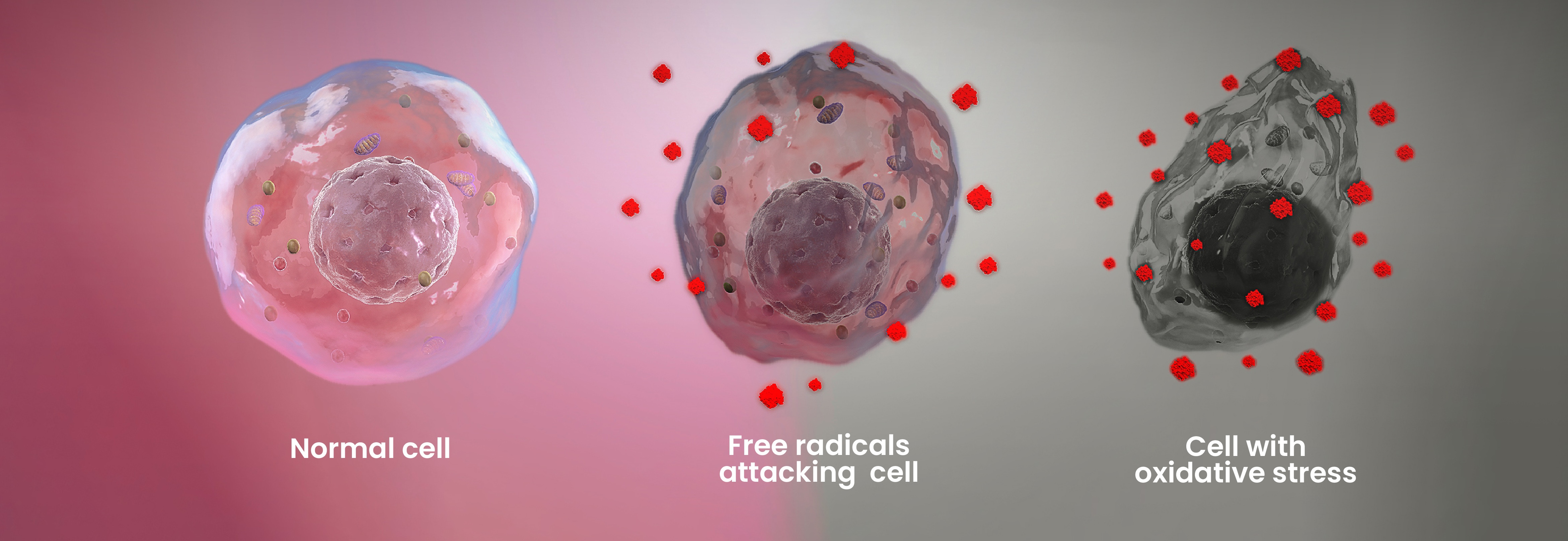
Oxidative stress arises from an imbalance between the production of reactive oxygen species (ROS) and the body's antioxidant defences. When defences are overwhelmed, the damage also affects membrane lipids, proteins and DNA. The process underlies physiological aging up to conditions such as cardiometabolic diseases and cognitive decline. In the skin, it contributes to photoaging through the degradation of collagen and elastin.
Why measuring Oxidative Stress matters
Visibility of the invisible: oxidative stress and the effects of an unhealthy lifestyle often do not present immediate symptoms. By providing a numerical value, we can transform an abstract risk into a measurable quantity, motivating individuals to change their habits more effectively than general recommendations;
Personalised consultations: two clients of the same age may have vastly different profiles. For instance, a sedentary smoker and a health-conscious runner have distinct needs. Scientific data facilitates a tailored discussion on lifestyle, nutrition, physical activity, sun protection, and potential supplementation;
Avoiding blanket supplementation: high-dose, indiscriminate supplementation with single antioxidants does not always yield benefits. Beginning with an objective measurement allows for rational and more suitable proposals regarding supplementation;
Monitoring over time: a single measurement serves as a snapshot; however, repeated measurements over time enable ongoing monitoring of a client's well-being. Regular follow-ups can enhance client loyalty.
Integration with other services: when combined with measurements such as blood pressure, blood glucose, lipid profile, and anthropometric data, information on oxidative stress helps create a comprehensive framework for primary prevention, aligning with the model of a pharmacy providing diverse consultation services.
The assays that make the difference – FORT and FORD
Oxidative stress markers are measured through two gold-standard assays:
FORT – Oxidative Status – Measures free radicals and oxidation of cells, helping to identify issues early and define personalised prevention strategies.
FORD – Antioxidant Capacity – Measures the levels of plasma antioxidants effective against free radicals damage, supporting personalised nutritional protection and lifestyle strategies.
FORT and FORD are two complementary assays employed by health and performance professionals globally, their combined measurement provides a complete picture of oxidative stress, expressed through the REDOX Index. The FORT and FORD tests are considered as the gold-standard for point-of-care (PoC) professionals and researchers.
Who it is recommended for
Monitoring Free Radicals and Antioxidants is relevant for many individuals including:
Individuals who want to improve their lifestyle, promoting longevity and slowing ageing;
Women, in pre-menopause, menopause, and during pregnancy;
Amateur and elite athletes;
Individuals with unbalanced diets, for example low in fruit and vegetables, or subjected to stress, and pollution;
Individuals with known diseases to monitor progress and reduce inflammation.
The value of science-backed evidence and the pharmacist expertise in bespoke care.
A combination of science-backed evidence and a professional's competence makes the difference in the pharmacy:
From salesperson to consultant - customers are not just looking for products; they seek knowledgeable professionals who can explain the meaning behind the numbers and guide them on the appropriate actions to take. With training in biochemistry, physiology, and pharmacology, pharmacists are uniquely qualified to provide this level of understanding;
Scientific authority - crucial in this field. Pharmacists can explain what might seem complex concepts, such as free radicals or the roles of endogenous and exogenous antioxidants, in a way that is easy for customers to grasp. This ability to convey science clearly separates those who offer genuine service from those who merely sell products;
Building loyalty is another key aspect - when pharmacists create a structured path of assessment, advice, and re-evaluation, they foster ongoing relationships. Clients are more likely to remember who provided them with thoughtful guidance over time rather than just the person who sold them a product;
Differentiation - in today’s market, where supplements are readily available — often online — personalized advice, based on science, from pharmacists becomes a unique and invaluable service. This kind of tailored guidance cannot be replicated in a digital environment, making the pharmacist's role essential and irreplaceable.
Establishing an Oxidative Stress Measurement Service in the pharmacy
To set up an effective oxidative stress measurement service, consider the following four-step approach:
Reception and lifestyle assessment: conduct a comprehensive assessment of customer habits, including smoking, nutrition, sun exposure, and physical activity levels;
Scientific framework: utilize professional gold-standard assays to measure oxidative stress accurately;
Personalised consultation: provide an interpretation of the results and discuss potential lifestyle modifications. If necessary, recommend nutrition, skincare, or supplementation options to support health and wellness, based on the findings;
Scheduled re-evaluation: implement follow-up assessments to track changes over time and strengthen the trust-based relationship with customers.
By measuring oxidative stress, pharmacies can deliver tailored preventive advice grounded in objectively measured data. This service not only addresses a latent need among customers but also enhances the professional expertise of pharmacists, transforming the customer relationship from transactional interactions to enduring partnerships.
Are you interested in offering the FORT and FORD tests in your pharmacy?